
Youmind Prompts – Copy & Generate
Trending youmind prompt ideas across styles and subjects — photography, cinematic stills, anime, poster art, and identity-preserving photo edits. Each one is complete and runs as-is.
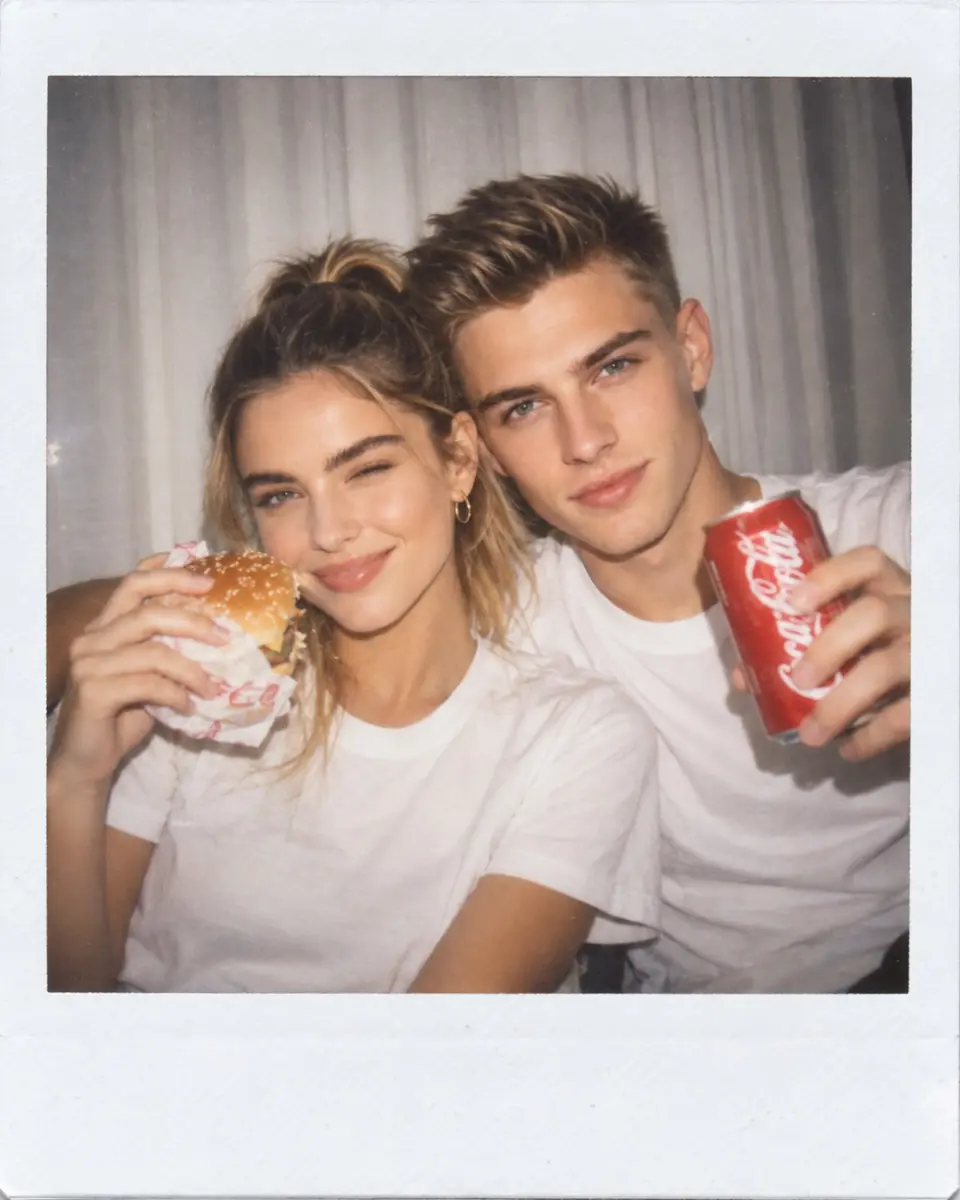
Take a photo taken with a Polaroid camera. The photo should look like an ordinary photograph, without an explicit subject or property. The photo should have a slight blur and a consistent light source, like a flash from a dark room, scattered throughout the photo. Don't change the face. Change the background behind those two people with white curtains. With that boy and me make a cute poses. Make the boy holding a red coca cola can and girl a burger.
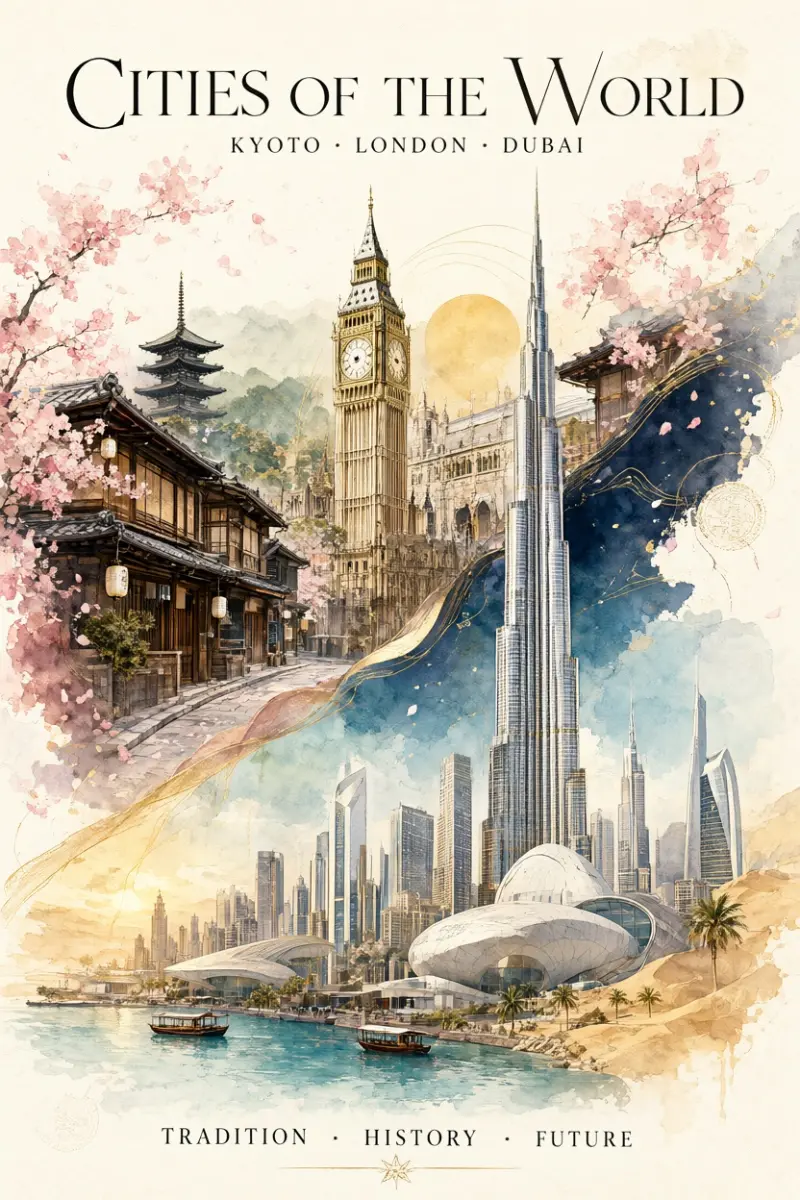
Create a premium 4:5 vertical travel-editorial watercolor art poster titled “CITIES OF THE WORLD”, combining the timeless beauty of Kyoto, Japan, the historic elegance of London, England, and the futuristic luxury of Dubai, UAE into one harmonious masterpiece. PURE GENERATION: Use the written concept as the creative direction. Blend all three destinations into one cohesive, artistic composition rather than creating separate panels or a collage. MASTER STYLE: Premium watercolor travel illustration, elegant architectural ink linework, delicate gold accents, vintage handmade ivory paper texture, sophisticated editorial design, artistic watercolor splashes, subtle paint drips, refined typography, cinematic lighting, intricate details, luxury gallery-quality poster. KYOTO, JAPAN: Include a traditional Japanese street with beautiful wooden machiya houses, dark tiled roofs, hanging lanterns, delicate pink cherry blossoms, a distant traditional pagoda, misty mountains, and scattered sakura petals. Use soft dusty-pink, muted green, charcoal, and warm beige watercolor tones. LONDON, ENGLAND: Feature the iconic Elizabeth Tower (Big Ben), elegant Gothic architectural details, and a subtle golden sun behind the tower. Illustrate the landmark using delicate gold and ivory linework, with a deep midnight-navy background accent and tiny golden stars. Maintain a sophisticated, timeless appearance. DUBAI, UAE: Show the magnificent Burj Khalifa rising above a luxurious modern skyline, the distinctive Museum of the Future, a peaceful waterfront, elegant traditional boats, palm trees, and warm Arabian desert scenery. Use golden sunset light, sandy beige, turquoise blue, amber, and soft sky-blue watercolor washes. COMPOSITION: Merge the three destinations naturally into one visually balanced artwork. Place cherry blossoms and traditional Japanese rooftops around the upper sides, position Big Ben elegantly in the upper-middle area, and make the Burj Khalifa the dominant architectural centerpiece. Integrate Dubai's waterfront and desert-inspired landscape into the lower section. Use flowing multicolored watercolor ribbons, delicate gold wave lines, artistic splashes, and subtle paint drips to connect the three cities. BACKGROUND: Warm ivory handmade paper with subtle natural fibers, soft watercolor stains, elegant negative space, delicate vintage travel-stamp details, and a refined museum-quality print aesthetic. TYPOGRAPHY: At the top, write: “CITIES OF THE WORLD” Below the main title, write: “KYOTO • LONDON • DUBAI” At the bottom, write: “TRADITION • HISTORY • FUTURE” Typography should be elegant, refined, perfectly spelled, and beautifully integrated into the composition. Use sophisticated serif lettering with carefully spaced capitals and subtle handwritten accents. LIGHTING AND QUALITY: Soft golden-hour illumination, atmospheric depth, realistic architectural proportions, delicate watercolor textures, intricate fine-line details, balanced contrast, premium art direction, ultra-detailed 8K-quality appearance. OUTPUT: 4:5 vertical composition, high-resolution travel-editorial poster, cohesive watercolor illustration, premium collectible art print, elegant international travel magazine aesthetic. NEGATIVE PROMPT: No separate image panels, no split-screen composition, no photographic collage, no cluttered layout, no oversized text, no misspelled words, no random lettering, no distorted architecture, no duplicate landmarks, no unrealistic building proportions, no excessive paint splashes, no oversaturated colors, no logos, no watermark, no blurry details. FINAL RESULT: A sophisticated, visually stunning world-cities watercolor poster that seamlessly combines Japanese tradition, London's historic elegance, and Dubai's futuristic luxury into one unified work of art.
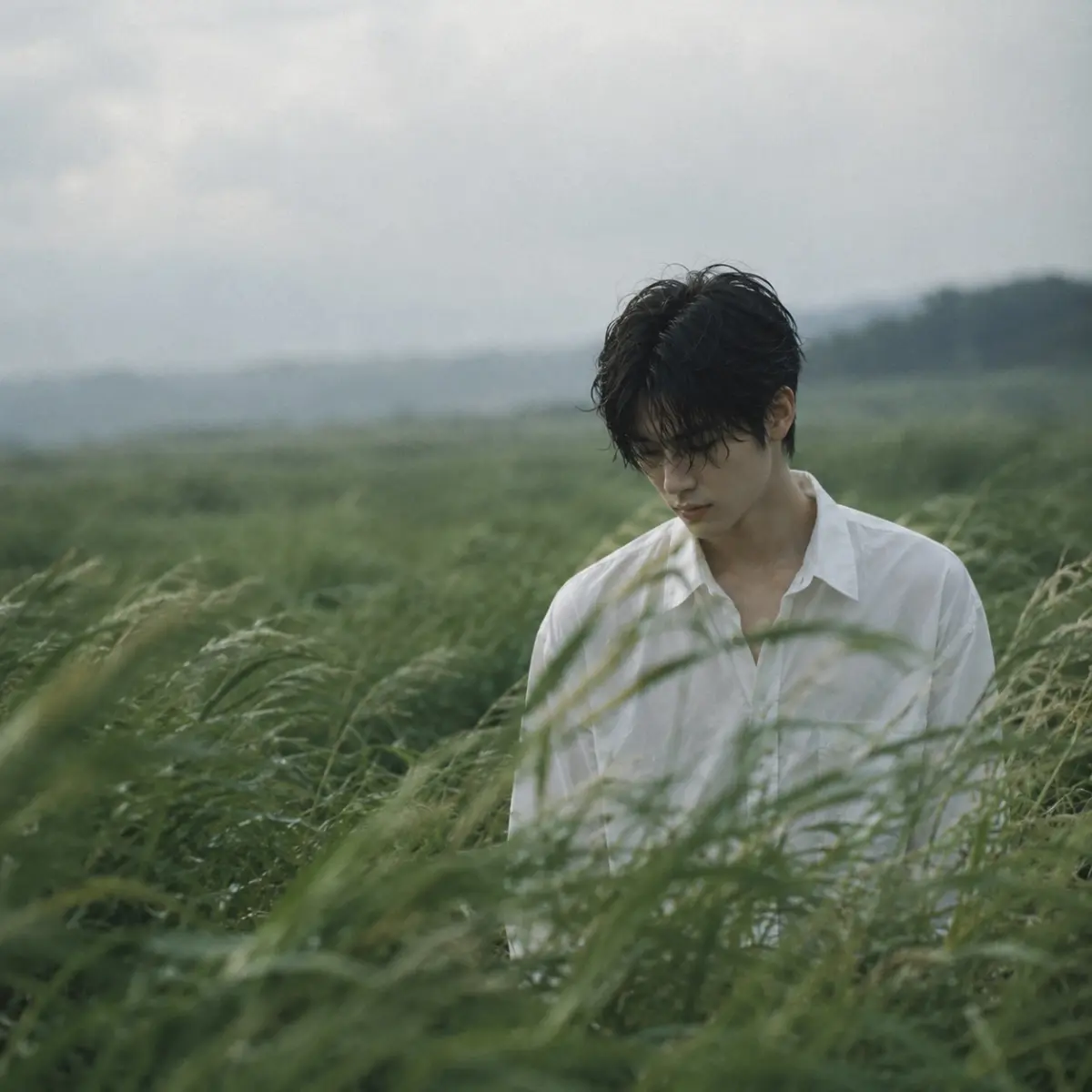
A cinematic fashion-editorial portrait of a young East Asian man standing partially concealed within tall, windswept green grass in an expansive meadow. He wears a loose, slightly oversized, crisp white button-up shirt that contrasts softly against the rich natural surroundings. His black hair appears slightly damp, naturally tousled by the wind, with delicate strands falling across his forehead and partially veiling his eyes. His head is gently lowered, gaze directed downward, conveying a quiet, introspective, melancholic mood. The tall grass surrounds and partially obscures his figure, creating layered foreground elements, immersive depth, and a sense of visual intimacy. Wind moves through the grass with subtle motion blur, while the subject remains sharply focused. The environment feels calm, isolated, and poetic, enhanced by a faint atmospheric haze and a muted palette of sage green, deep forest green, and soft neutral tones. Soft overcast daylight provides diffused, shadowless illumination with smooth tonal transitions, low contrast, gentle highlights, and realistic skin rendering. Shallow depth of field produces creamy bokeh and natural background separation, while fine film grain adds an organic editorial texture. Minimalist composition emphasizing solitude and emotional storytelling. Square 1:1 composition, subject positioned slightly right of center with generous negative space above and around him, balanced visual weight, refined framing, sophisticated Korean and Japanese fashion magazine aesthetic, cinematic realism, highly detailed photorealistic photography, 85mm portrait lens, f/1.8, natural lens compression, ultra-realistic skin texture, premium color grading, atmospheric depth, elegant visual storytelling, award-winning editorial photography, masterfully composed, authentic and emotionally resonant.
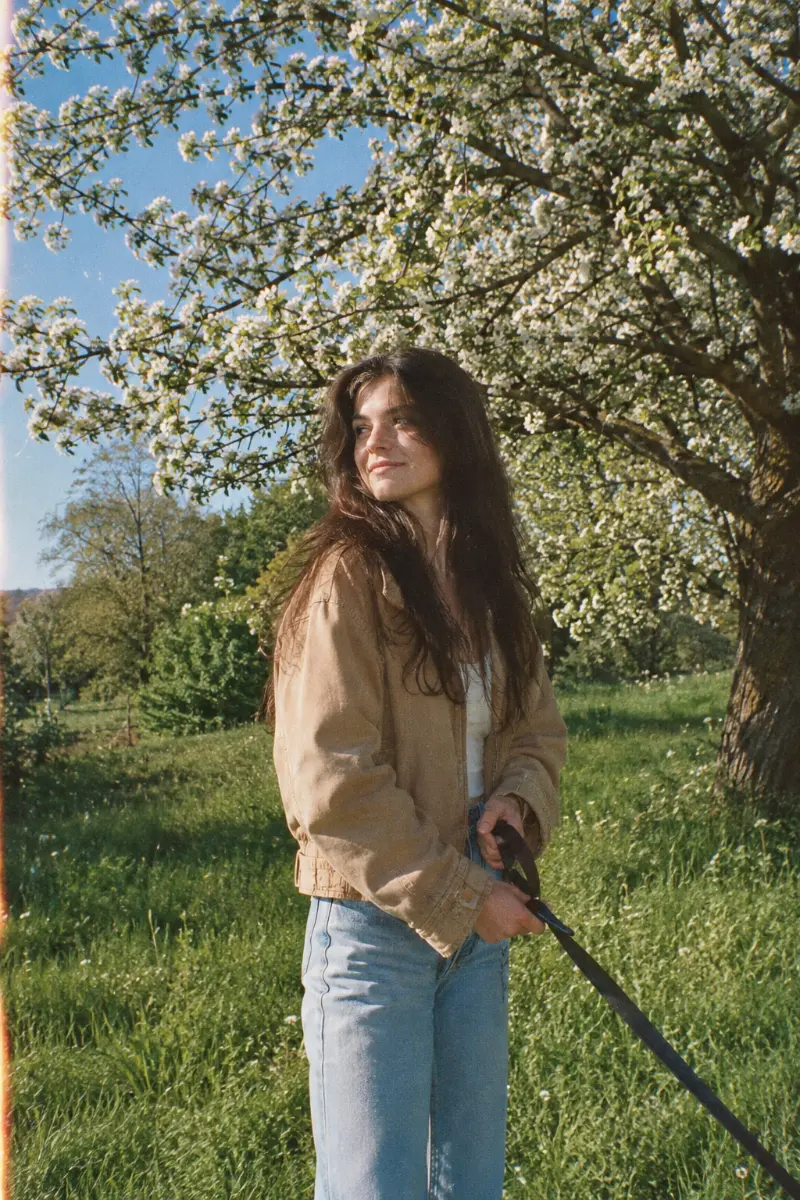
A young woman with long, natural brunette hair standing outdoors in a sunny green field under a blossoming tree. She is wearing a casual light brown/tan jacket over a top paired with light blue jeans, holding a long leash in her hands. The background features lush grass, vibrant green foliage, and trees filled with white spring blossoms against a clear blue sky. The image has a vintage 90s film aesthetic, analog texture, soft natural lighting, warm retro color grading, slight film grain, candid photograph, shot on 35mm film.
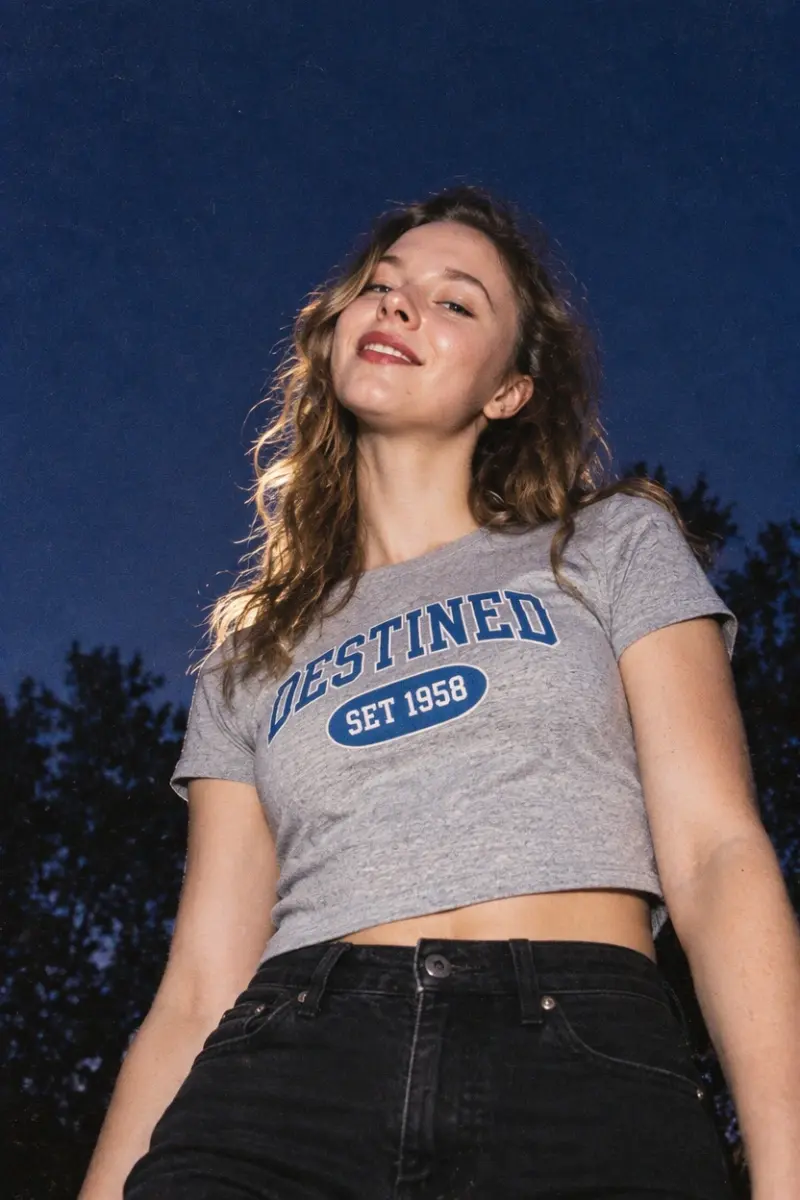
A low-angle, close-up photograph capturing a young woman with wavy brown hair outdoors at dusk. She is wearing a grey cropped t-shirt with a blue and white graphic text that reads 'DESTINED' above 'SET 1958' and black denim bottoms. Her head is tilted, and she is looking directly into the camera lens. The dark blue evening sky serves as the background, with silhouetted tree branches visible at the bottom of the frame. Strong flash lighting is directed from the front, illuminating her face and highlighting strands of her hair. The composition has a grainy film photography aesthetic.
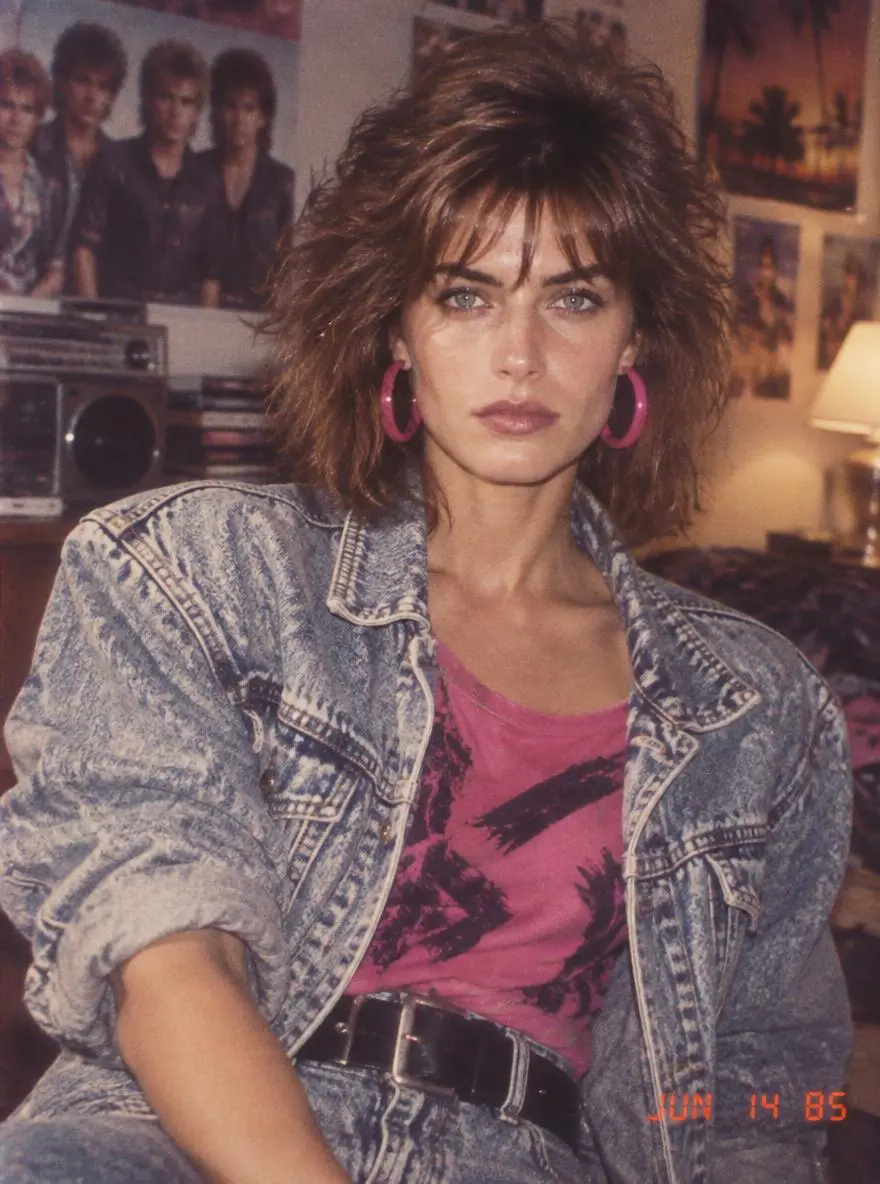
Using my uploaded photo, show me what I would have looked like around 1985. Preserve my identity, facial features, skin tone, age, and recognizable appearance. Reimagine my hair, clothing, accessories, and surroundings with bold, unmistakably mid-1980s styling—expressive silhouettes, statement accessories, layered details, distinctive colors, and textures. Make it feel like a genuine 1985 photograph with analog grain, faded color, direct flash, and subtle softness. Add a period-accurate 1980s red-orange date stamp in the lower corner. No modern objects or text.
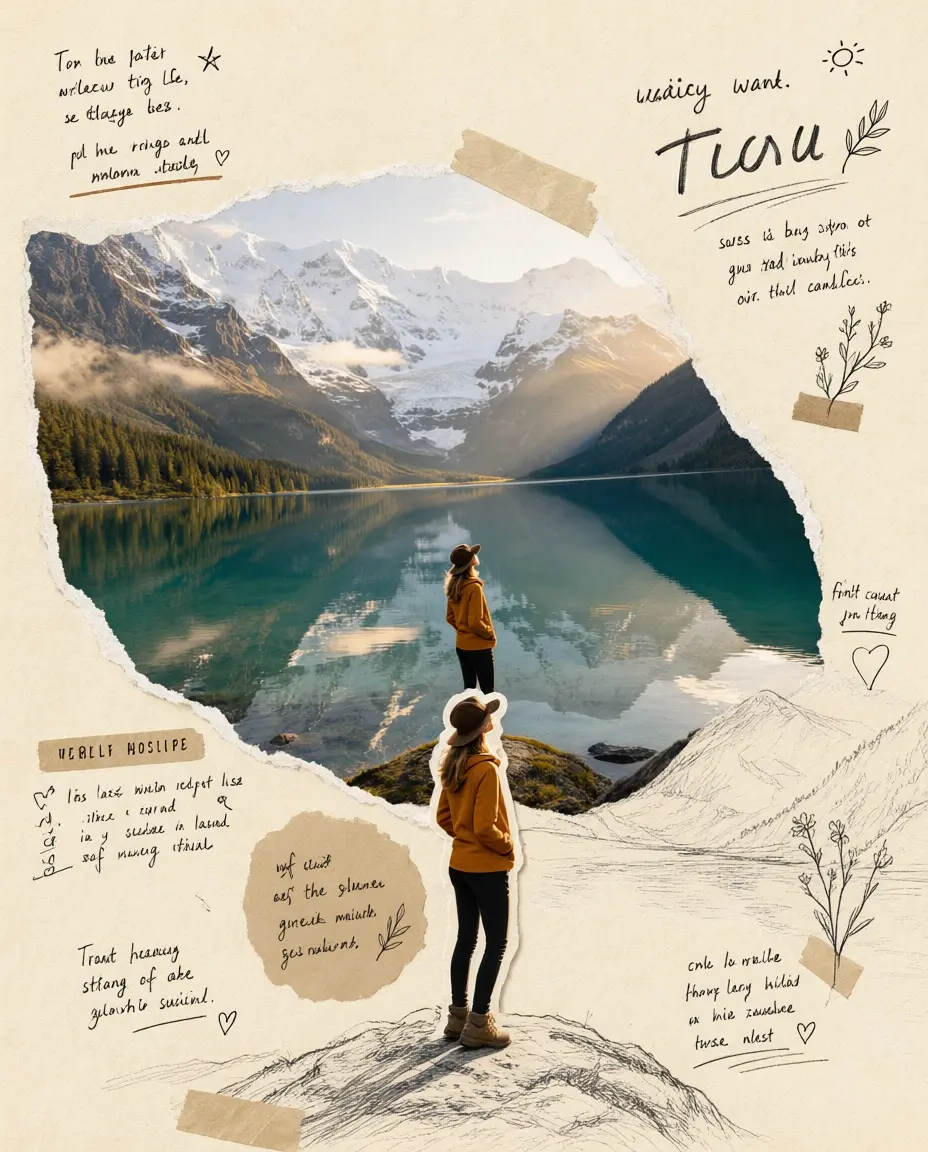
Transform the uploaded photo into a premium editorial scrapbook / torn-paper collage artwork. Keep the main subject of the original photo photorealistic, sharp, and clearly recognizable, with natural lighting, realistic textures, and authentic colors. Place the photo on a warm ivory handmade paper background with subtle paper grain and an imperfect tactile texture. Create an organic ripped-paper transition where parts of the original photograph appear to tear open and naturally continue into the lower area as a minimal hand-drawn ink illustration / sketch, blending the real photograph with the illustrated extension. Add subtle vintage editorial details, delicate handwritten-style typography, tiny hand-drawn doodles, imperfect ink lines, small decorative elements, and artistic negative space. Let selected objects from the photograph flow beyond the torn edge and interact with the illustration, creating a playful 3D collage effect. Use soft shadows beneath the paper layers and realistic paper edges for depth. Color palette: warm cream, beige, muted brown, soft earthy tones with the original photo’s natural colors preserved. Lighting: warm golden-hour / nostalgic sunlight, soft highlights and gentle shadows. Composition: sophisticated, minimal, balanced, artistic, lots of breathing room, premium magazine/editorial aesthetic. Texture: handmade paper, subtle grain, torn fibers, slightly imperfect printing and ink texture. The final image should feel like a real photograph physically pasted onto handmade paper and partially transformed into a delicate illustration, rather than a digital filter. Important: Do not alter the main subject’s identity, proportions, objects, or important details. Avoid excessive decorations, cartoonish rendering, overly clean digital edges, neon colors, or a generic AI-art look. High-end contemporary scrapbook editorial design, photorealistic + hand-drawn mixed-media collage, 4:5 or 3:4 vertical composition.
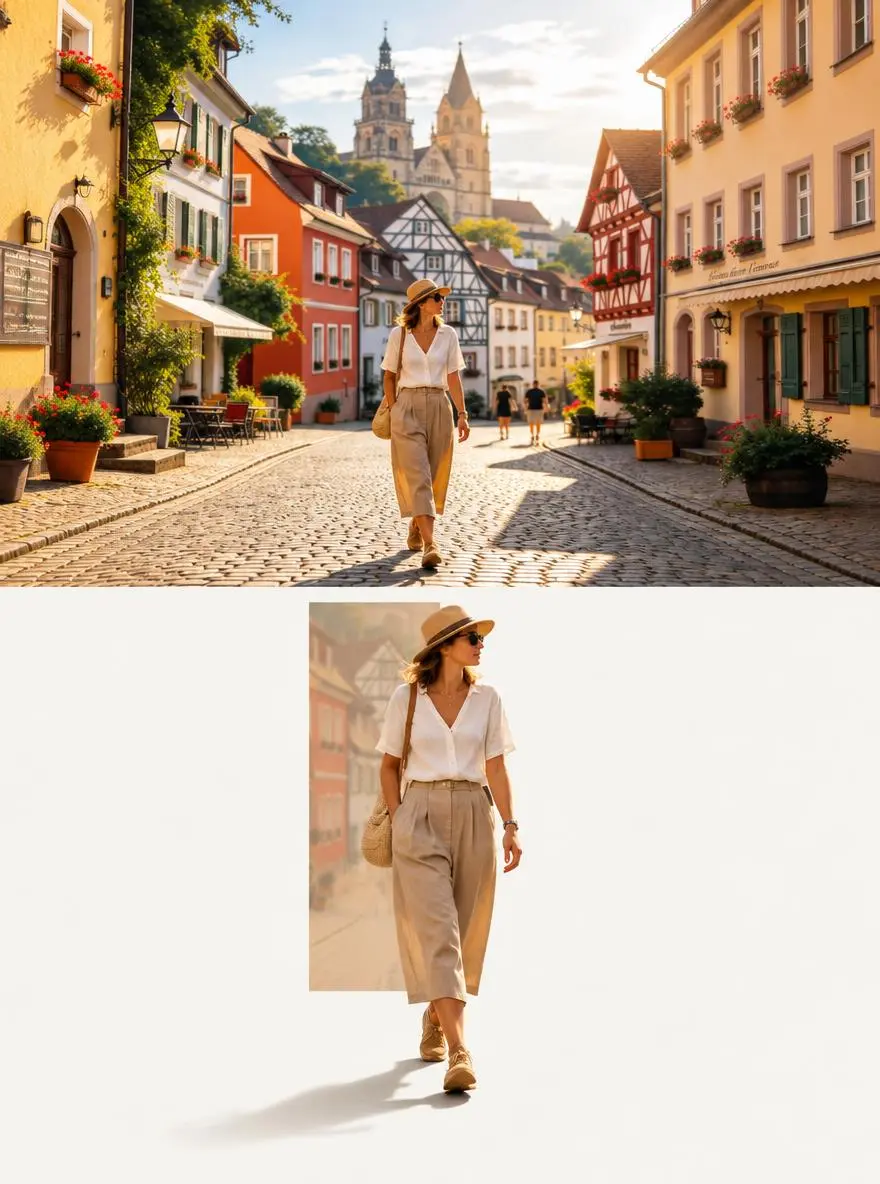
Premium Editorial Poster Instructions Each uploaded photo must be made into a separate, independent, premium editorial poster, and multiple photos must not be combined. Use a strict 3:4 vertical canvas. Split the canvas horizontally in the exact center: the upper half and the lower half each occupy 50% of the height, are equally wide, and equally high, with no alteration of proportion. The upper half uses the original photo directly and must not be regenerated. Preserve the identity of the main subject, the human body or architectural structure, proportions, perspective, spatial relationships, texture, natural light and shadow, color, and environment in their entirety. Only slight cropping and restrained premium color grading are permitted; re-drawing the main subject, fictional light, HDR, excessive saturation, plastic texture, and fictional content are prohibited. hibited. When needing to adapt to the frame, only environmental areas such as sky, water surface, ground, walls, plants, or background can be extended. The lower half extracts and reconstructs the "narrative core" of the photo: it can be a single primary subject, or a group of related elements that together embody the photo's identity, scale, action, o story relationship. Maintain its realistic, recognizable appearance, proportion, internal structure, texture, and relative position. Do not remove important related elements, and do not directly us rectangular photo cutouts. The reconstructed subject typically occupies 55%-80% of the width of the lower area. It should naturally extend based on the photo's primary direction and retain plausible ground, water lines, shadows, or softly dissipated edges to integrate into the background, avoiding a sticker-like or floating appearance. Incorporate a narrow, low-saturation geometric color field behind or through the center of the subject, serving as a "critical window" between reality and editorial abstraction. The color of the window must be extracted from the original photo, and its orientation (horizontal, vertical, or diagonal) chosen based on the overall narrative direction. The subject must actively pass through the window: part of it is within the color field, and part enters the open negative space, naturally crossing the window's boundary to create occlusion, penetration, and spatial depth. The window is not a frame or a card; it must not fully enclose the subject. Only one primary window is allowed; multiple color blocks, thick borders, rounded corners, strong gradients, and drop shadows are prohibited. Use a white, cool white, very light gray, or near-white background for the lower half, coordinated with the photo. Employ a restrained asymmetrical composition and abundant negative space to establish a three-tier hierarchy: Reconstructed subject or narrative composition Low-saturation geometric window
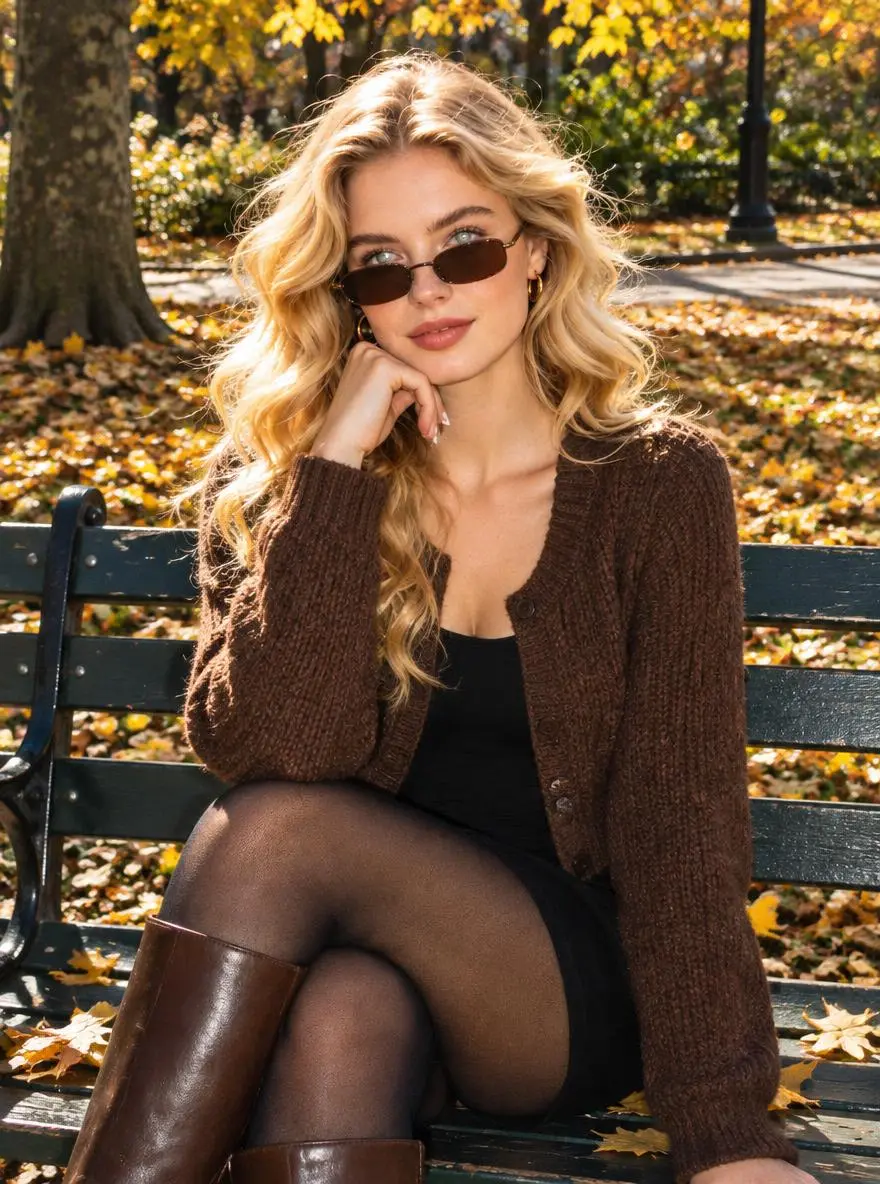
Create a highly realistic lifestyle photograph of the girl from the reference image. Her identity must remain completely unchanged — preserve her exact facial structure, proportions, distinctive features, hairstyle, and natural appearance. Do not modify or reinterpret her face in any way. She is seated comfortably on a park bench surrounded by a warm autumn setting. The camera is positioned directly in front of her, framing her centrally. She wears a short chocolate-brown chunky-knit cardigan over a short black dress, paired with black tights and tall brown leather boots. Keep her hairstyle exactly as shown in the reference. She wears slim, narrow sunglasses and rests her right hand gently beneath her chin. Her gaze is directed slightly to the side rather than toward the camera, accompanied by a subtle, natural smile with no visible teeth. Her makeup is polished and flawless, with dusty-rose lipstick and square-shaped French manicure nails. The park around her is covered with scattered autumn foliage in rich yellow and orange tones, spread naturally across the grass and pavement. Capture the scene with a bright, fashion-forward lifestyle-blog aesthetic: strong highlights across the skin, deep contrasting shadows, direct raw-flash photography, and a glossy early-2000s digital-camera feel. Maintain realistic skin texture, subtle photographic grain, crisp details, and high contrast without making the image look overly processed or AI-generated. Identity preservation is the highest priority. Do not alter the face, facial proportions, or recognizable features from the reference.
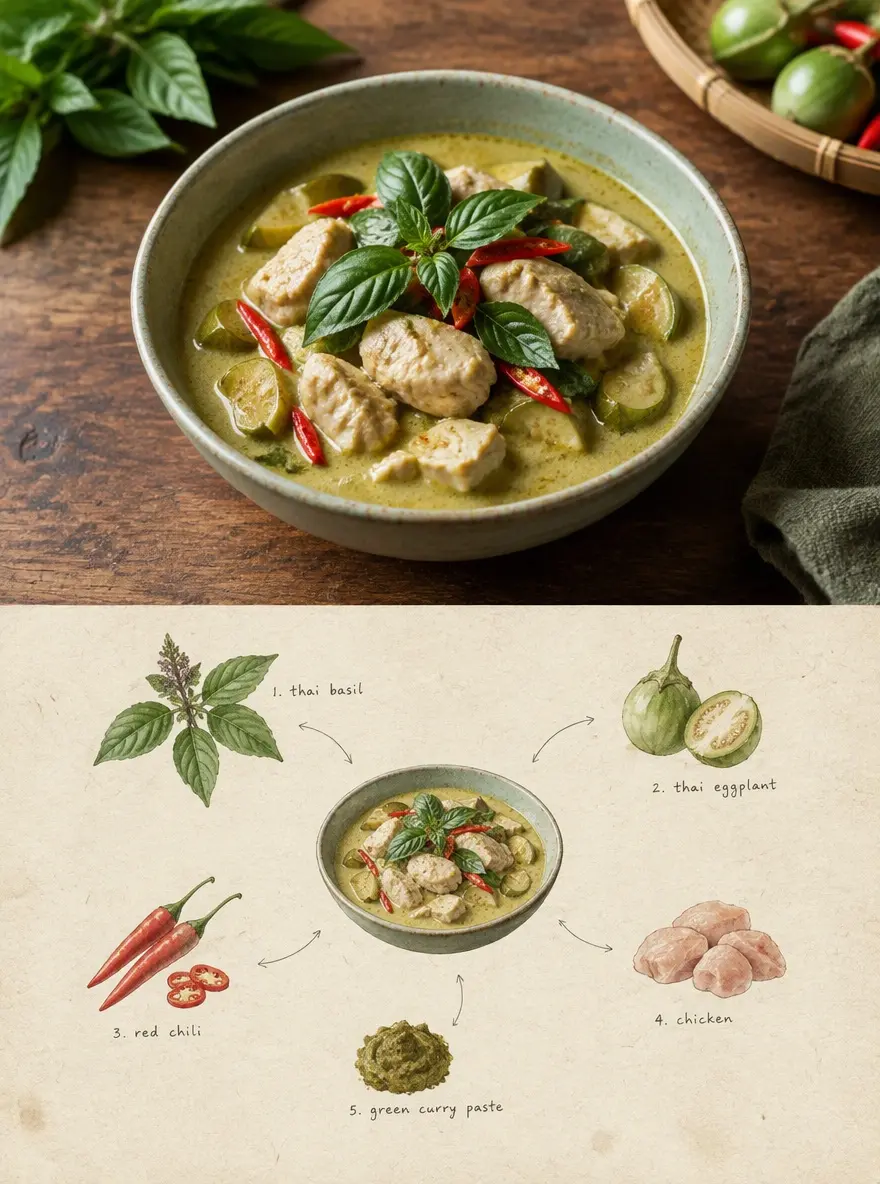
Create one elegant travel-food editorial poster combining realistic food photography in the upper section with a handmade ingredient-observation sketchbook in the lower section. Feature ONE recognizable plate or bowl containing a single dish, with at least three visually distinct ingredients. UPPER SECTION — REALISTIC FOOD PHOTOGRAPHY: Occupy approximately 48% of the canvas height. Create a beautifully composed, authentic photographic view of the specified local dish, preserving believable ingredient textures, natural lighting, realistic proportions, and culturally accurate presentation. Use subtle food-magazine color grading and extremely light film grain. Keep the entire plate or bowl visible. SECTION DIVIDER: Separate both sections with a straight, clean horizontal boundary. A very thin warm-ivory paper strip is optional. No gradients, blending, or elements crossing the divider. LOWER SECTION — INGREDIENT OBSERVATION SHEET: Use warm ivory drawing paper with visible fibers, fine grain, faint smudges, and subtle handmade irregularities. Create a sparse, asymmetrical food-field-note composition rather than repeating the full photographic dish. Place ONE small, simplified but recognizable illustration of the complete dish near the center. Keep it secondary and compact, occupying approximately one-third of the lower section’s width. Around it, illustrate 3–6 individually selected ingredients inferred from the dish. Use small watercolor specimens, cut-surface studies, herb sketches, grain clusters, sauce swatches, or distinctive ingredient shapes. Arrange them at varied sizes and angles with generous breathing room. DRAWING STYLE: Matte gouache, delicate black-ink outlines, slightly hesitant hand-drawn strokes, dry-brush gaps, uneven pigment coverage, soft watercolor edges, visible paper texture, and restrained natural colors. Keep ingredients recognizable without excessive detail. Add a few fine arrows and small handwritten numbers connecting specimens to the miniature dish. TYPOGRAPHY: Use minimal, understated editorial annotations only when helpful. Short ingredient names or tiny handwritten notes are acceptable. Keep all text small and secondary; avoid unnecessary titles or decorative lettering. COLOR PALETTE: Derive the colors naturally from the dish, balanced by warm cream, muted earth tones, and subtle ink details. FINAL AESTHETIC: Authentic local food photography × handmade ingredient studies × refined travel-food editorial × collectible culinary field notebook. AVOID: Multiple dishes, duplicate plates, mixed
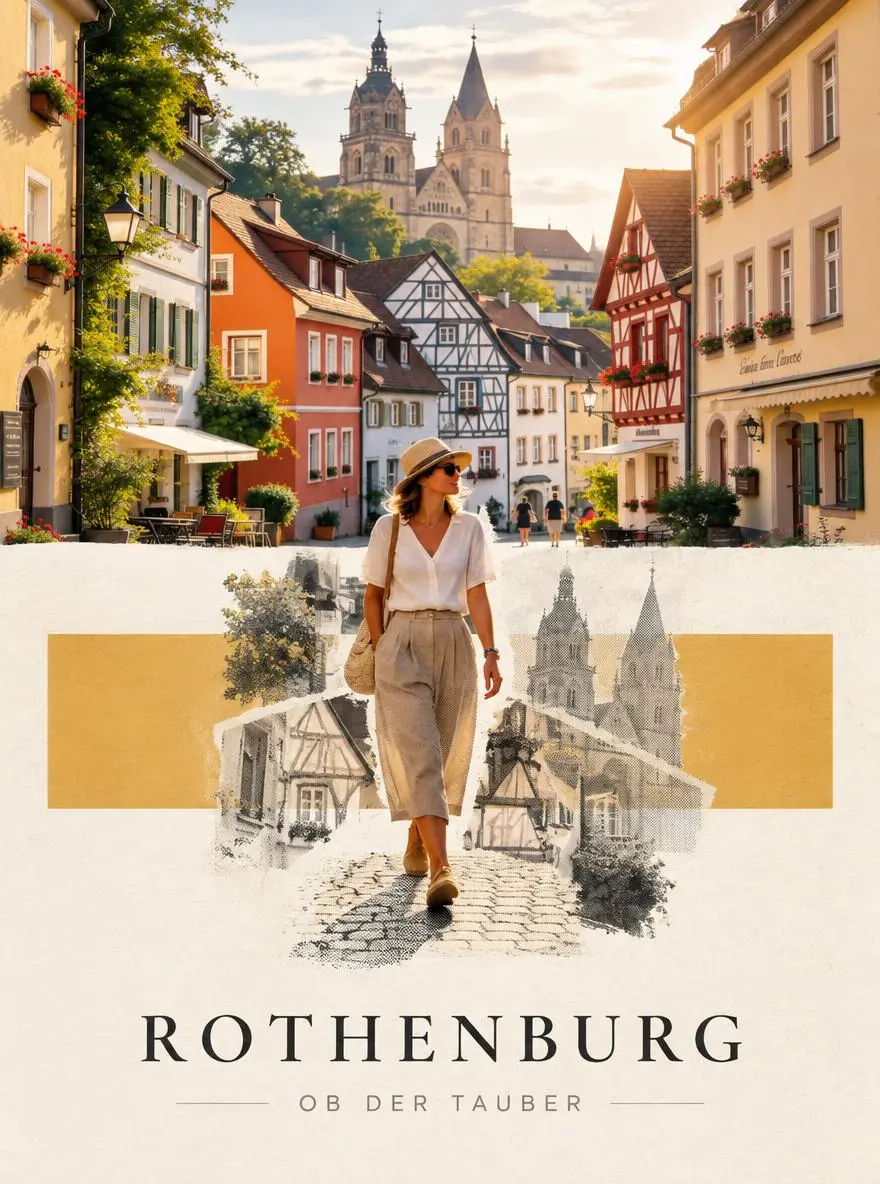
Create a sophisticated contemporary travel-art poster from the uploaded londscape photograph. Strict 3:4 vertical format. The upper half must remain the original landscape photogroph. Preserve all important environmental structures, natural textures, lighting, shadows, horizon, architecture, people and perspective. Do not regenerate the scene. The lower half reconstructs the landscape's strongest narrative element using delicate photographic fragments, halftone printing, subtle paper fibers and fading edges. Use a single horizontal geometric color field sampled from the landscape. Let the reconstructed subject or horizon physically intersect this field. Keep the background most white with muted tones derived from the original image. Avoid saturated colors. The result should resemble a limited-edition museum travel poster rather than a conventional photo collage.
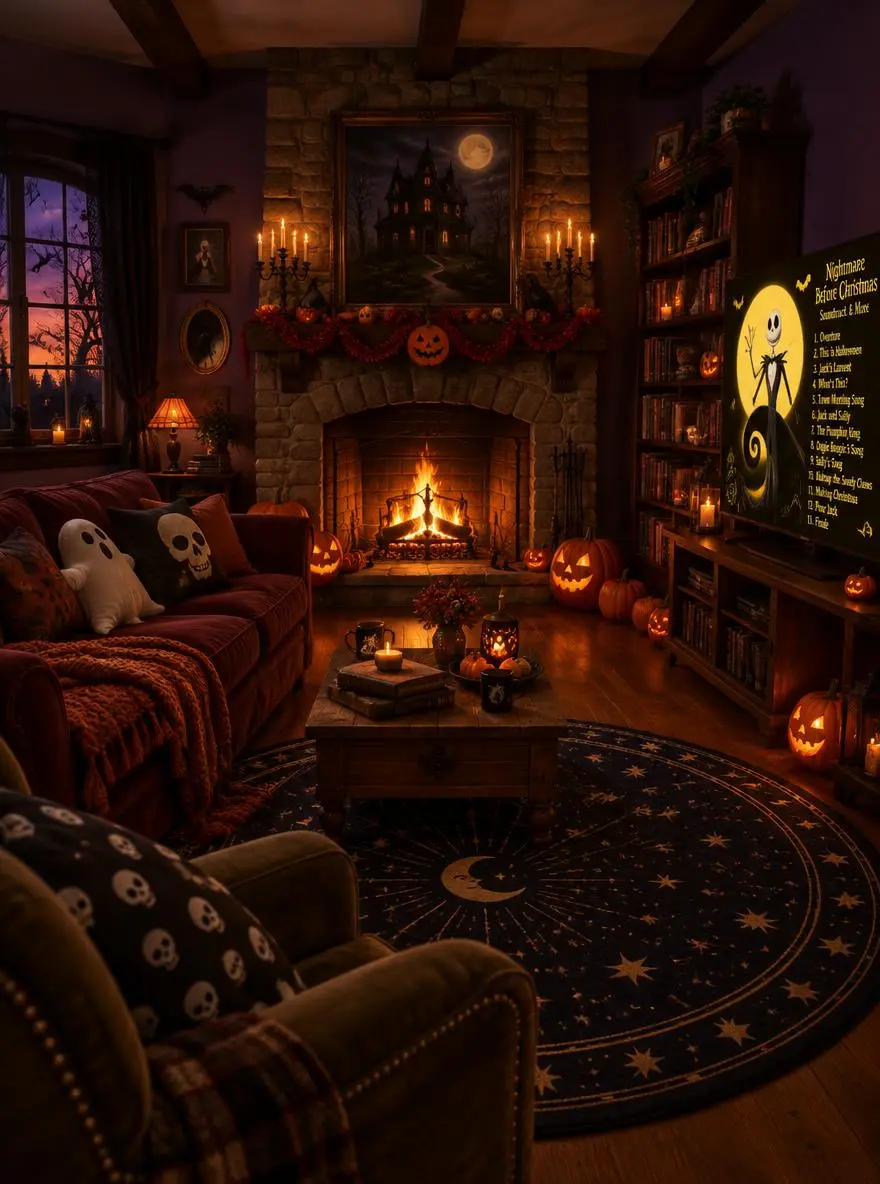
A cozy, dimly lit interior of a spooky Halloween-themed living room. The walls are painted a deep purple, and the ceiling features dark wooden beams. A large stone fireplace sits in the center back wall with a roaring fire inside; above it hangs a framed picture of a haunted house under a full moon, flanked by candelabras and draped with red garland featuring a jack-o'-lantern face. To the left is a plush burgundy sofa adorned with various pillows, including one shaped like a white ghost and another with a skull pattern, along with a knitted throw blanket. In the foreground, an armchair has a black pillow with white skulls on it. On the floor lies a circular rug with a starry night pattern. Several orange pumpkins are scattered around the room, some glowing from within. To the right, a large flat-screen TV displays a yellow background with a skeleton character and a long list of song titles or text. Beside the TV stands a tall wooden bookshelf filled with books. A small window on the far left shows a twilight sky outside. The overall atmosphere is warm yet eerie, illuminated primarily by the fireplace glow and ambient lighting.
Youmind Prompts – Trending AI Image Prompt Ideas
Browse and copy youmind prompts — poster art, cinematic stills, anime scenes, stylized portraits, and viral photo edits — then run them on your own photo or from pure text in about a minute.
Youmind prompts are the trending search for ready-made AI image generation prompts — the browseable collections of poster art, cinematic stills, anime scenes, portraits, and photo-edit prompts that creators copy instead of writing from scratch. Every prompt below is complete and ready to run as-is — copy it into your favorite AI image generator, or hit Create, pick a generator, and run it on your photo or as text-to-image, then download the result in about a minute. Your identity stays yours.
Why Create With Youmind Prompts
Four reasons a ready-made youmind prompt is worth your next post.
Skip the Blank Page
No prompt-writing experience needed — a finished youmind prompt already nails the style, subject, lighting, and camera, so you start at the good part.
Studio-Grade Looks, Zero Gear
No camera, studio, or editing skills needed — your phone photo plus one youmind prompt delivers a professional-shoot look.
Trending Styles, Refreshed
Poster art, cinematic stills, anime, cyberpunk — the collections track whatever is going viral, so there's always a fresh look to try.
Ready in Minutes, Not Hours
Copy a prompt, upload your photo or start from text, and generate — a finished image before your coffee cools.
How to Use Youmind Prompts
From copy to finished image in three steps — no prompt-writing experience needed.
Copy a prompt
Pick a look and hit Copy Prompt. Every youmind prompt runs as-is; tweak the style, subject, lighting, or colors before sending if you like.
Add your photo and generate
Hit Create, choose a generator, and it opens with the prompt pre-filled. Upload a clear photo of yourself to keep your face recognizable, or run it as pure text-to-image.
Download and share
Save the finished image straight to your device and post it. Generations aren't stored on your account, so download before closing the page.
Youmind Prompts FAQ
Common questions about youmind prompts and this prompt library